Template Library
TemplatesAgile - Next.js + Sanity SaaS Marketing Site Template
Agile - Next.js + Sanity SaaS Marketing Site Template
Premium Next.js + Sanity template for SaaS sites. Every section hero, pricing, testimonials, blog is editable from Sanity Studio. Launch in days.
14.1.4 nextJs
^18 react
^7.22.1 sanity/client
^6.17.1 resend
^11.0.20 framer-motion



$79
Single project license · lifetime updates
or
 All-Access
 Mobile-first & responsive
Core Web Vitals 100
What's Included
Everything you need to rank and convert
Full Page-Builder System
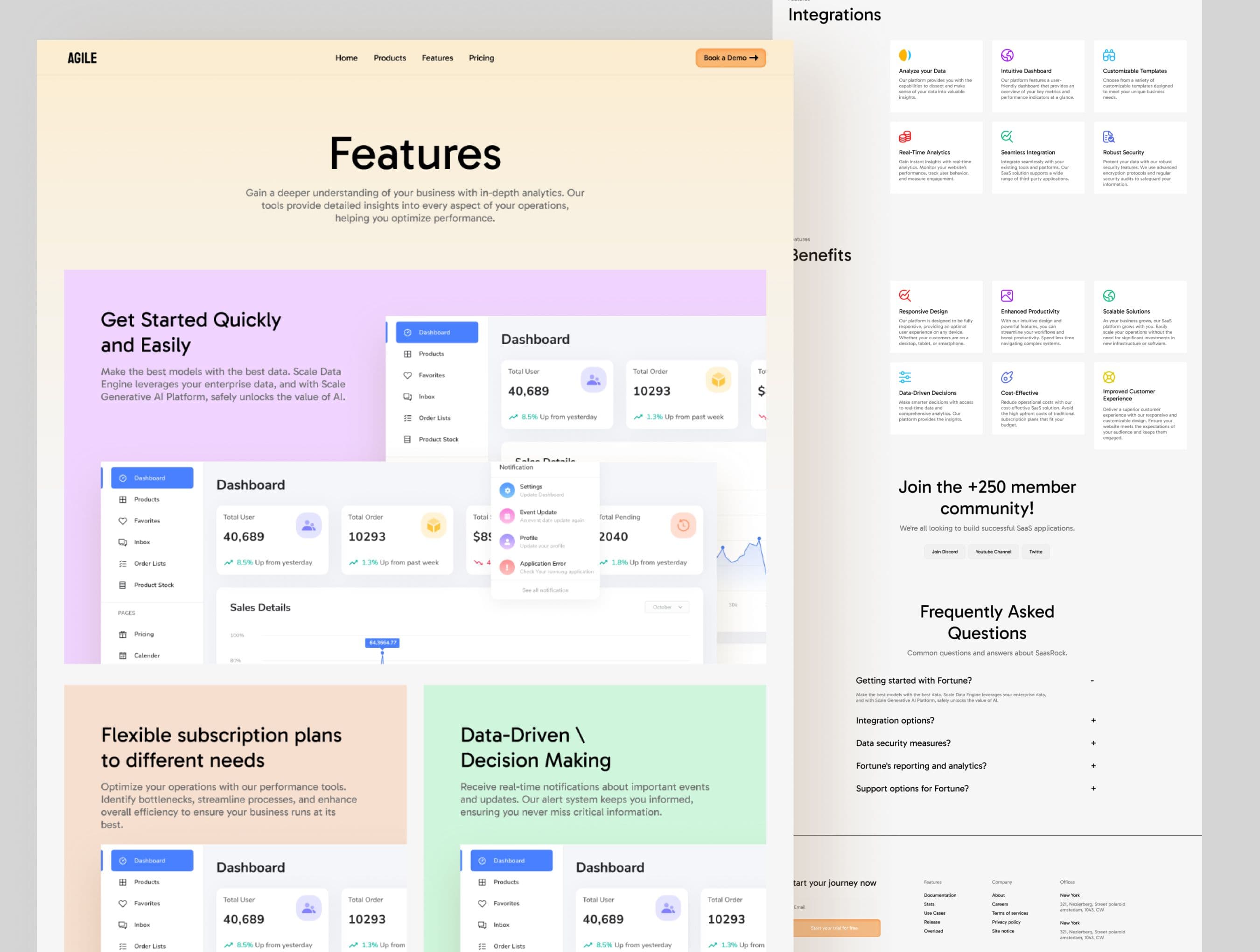
Build any page by mixing and matching 15+ pre-built sections — heroes, feature grids, pricing tables, testimonials, and more. No fixed layouts, no rebuilding from scratch for every new page.
Content-Managed, Not Hardcoded
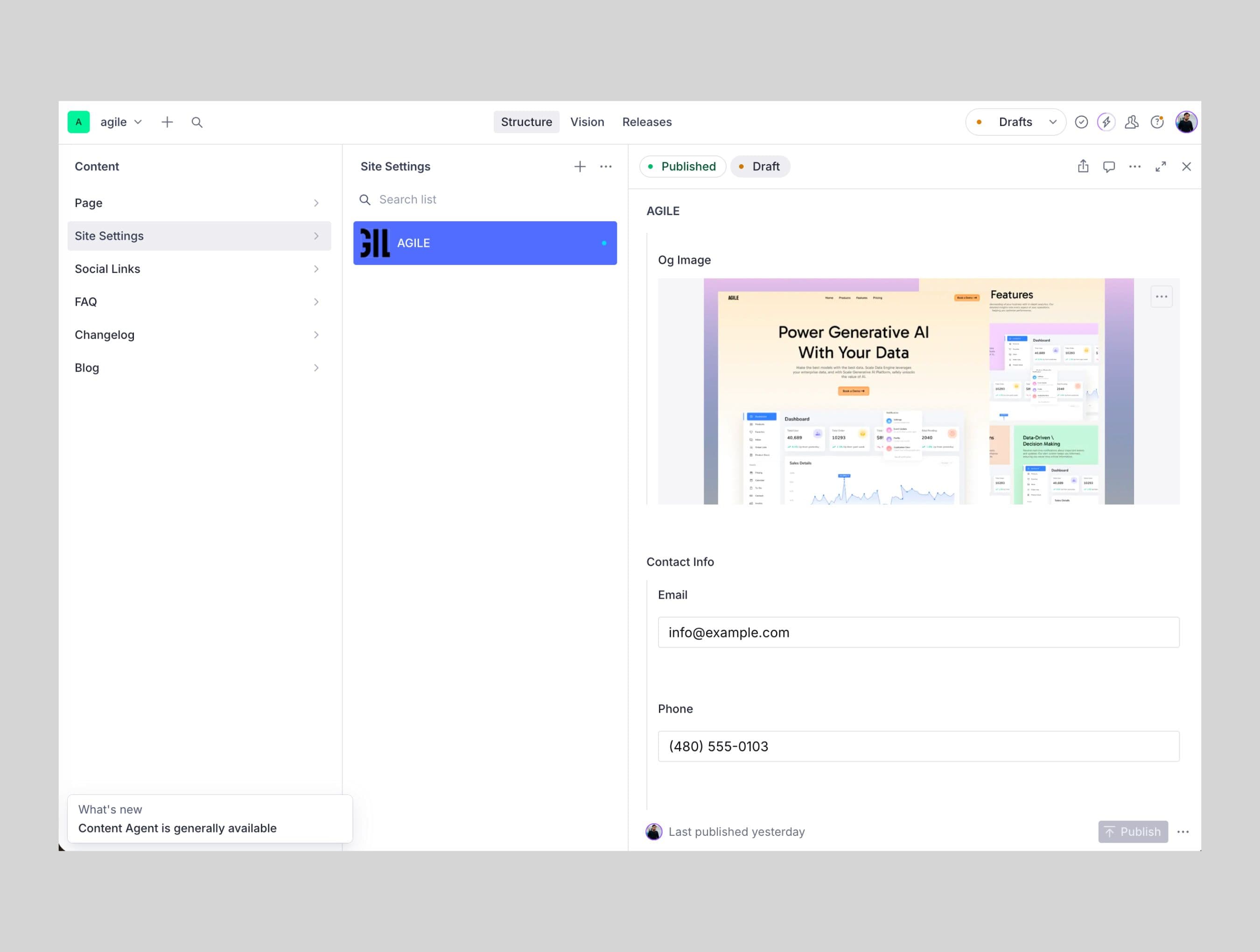
Every section pulls its content directly from Sanity Studio. Update headlines, images, and copy without touching a single line of code.
Flexible Feature Sections
Seven different feature layout types - grid, cards, breakdown, accordion, insights, overview, and integrations - so your product's strengths never feel squeezed into the wrong format.
Pricing Table
A ready-to-use, fully editable pricing table section for showcasing your plans and tiers.
Blog with Rich Content Support
A complete blog system powered by Sanity's Portable Text — supports images, pull quotes, and lists, so your posts look polished without custom code.
Changelog Page
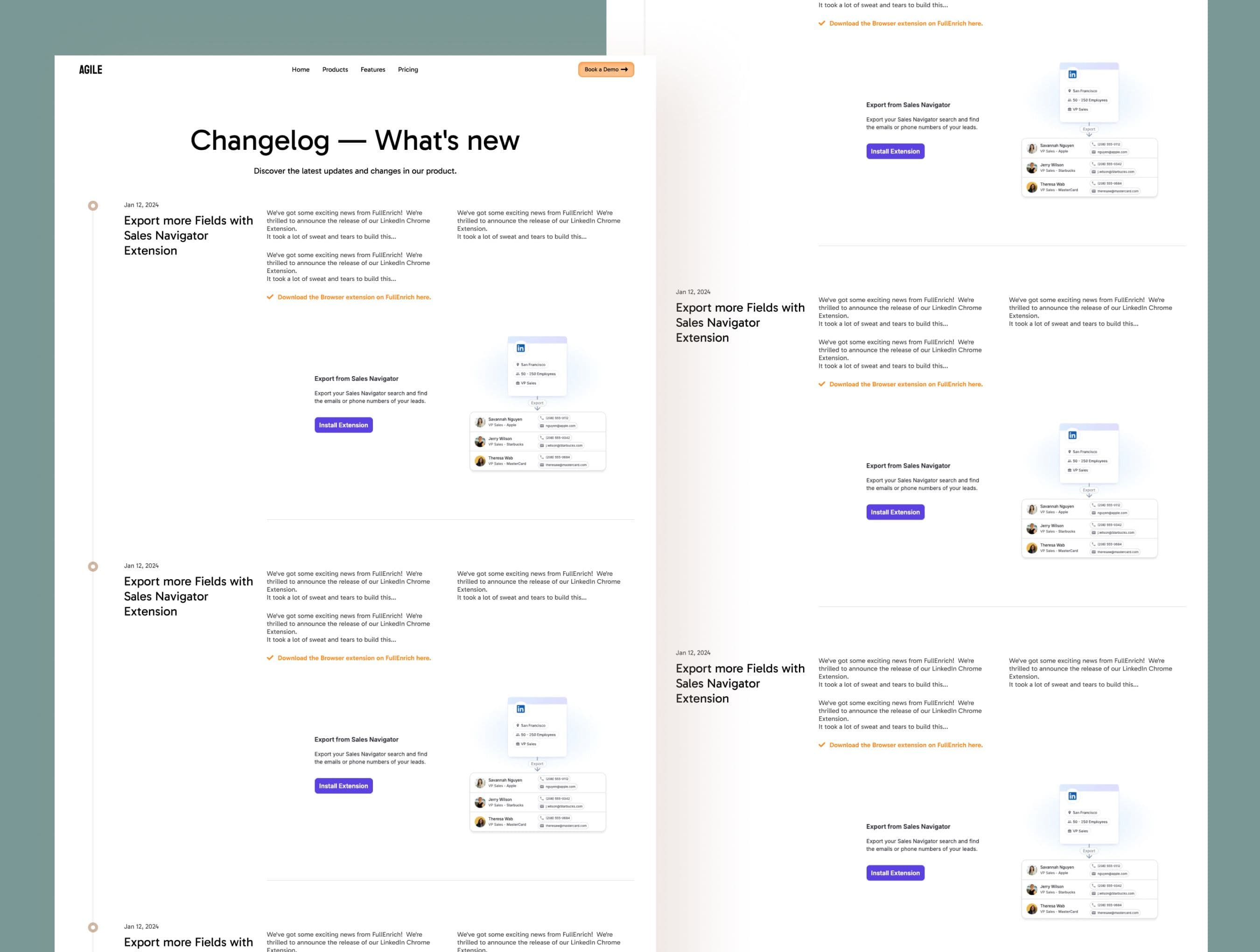
Keep users updated on product changes with a dedicated changelog page, manageable from Sanity.
Working Contact Form
Common Features
All of our NextJS themes come with the following features:
Clean code and folder structure
Compatible with all modern browsers
Free Icons + Google font
Free future themes update
Free customers support
Responsive design
Highly customizable
Component-based design
Quick Setup
Live in under 30 minutes
Full documentation included — a step-by-step guide from download to deployed.
~30 min setup4 simple stepsFull docs included
- 01
Download the code
Grab the zip from your account, unzip it and open the folder in your terminal.
- 02
Install dependencies
One command pulls in Next.js, Sanity, Tailwind and everything else.

Ready for a faster site that's easier to edit?
Book a free 30-minute call. We'll review your current site and send a fixed-price plan. No pressure, no pitch.
Book Free Call No commitment required
 Next.js App Router
 Sanity CMS
 Tailwind CSS
 TypeScript

